
Dr. David Kippen, HRExaminer.com Editorial Advisory Board Contributor
This week, we’re trying something different. David Kippen, the genius behind Evviva Brands is going to take us on a tour of Market Research. David is a powerful advocate for the idea that you have to learn about the markets you serve. So, one step at a time, we’ll go through the basics of doing your own work to get a ‘dirt under the fingernails’ look at the market. – John Sumser
Dr. Kippen is CEO and Chief Strategist of Evviva Brands. With a background spanning advertising and communications and a client base spanning the globe, Dr. Kippen is recognized as among the top thought leaders in brand strategy. David has held leadership roles in several top associations that support the HR and communications professions. He is currently a member of SHRM’s Performance Management Task Force and an active member of the Council of Communication Management. Full Bio »
DIY Market Research 2/5 Infrastructure
by David Kippen
While it’s everywhere,
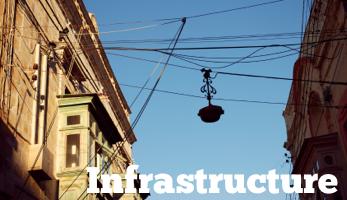
"infrastructure can be deceptive, because what catches your eye may not be terribly important."
Power supply is first because without power, economic growth can’t happen. Often developing countries struggle to keep power supply growing at the same rate as the private economy. And if they can, they struggle with the physical demands of routing wires to ever more locations from a fixed power grid.
The reason for this is simple: as more and more buildings electrify, they tap into a grid built before homes and businesses were rich enough to require electricity. In Vietnam, virtually every telephone pole in downtown Ho Chi Minh City (Saigon) is topped off with a crows-nest of wires. And though Bangkok is superficially much farther along the development curve, you’ll see an extremely overburdened power grid with power lines everywhere and often, a chaos of wiring at individual poles.
Eventually, the development will peak. That peak will then be followed by the orderly replacement of the haphazard wiring. Until then, signs of cobbled together power delivery are good indicators that the location is still growing.
Road quality follows a predictable progression from dirt to gravel to either asphalt or concrete as cities grow. However, the demands of growth—heavy traffic, excessive trucking carrying heavy loads—often degrades roads faster than they can be developed, particularly when there is limited capital for government investment. In city centers, the quality of roads, curbs, and sidewalks tells you far more than the number of new buildings you see. Taken together with the moped index (I’ll post about this later), road quality is a great indicator of the health of the public and private sector.
Capital investments in transportation such as rail lines are important because they’re a sign of arrival. Only when a population is large enough, fixed enough in location, and regular enough in migration patterns does it make sense to alleviate the strain on roads by investing in light rail systems. Similarly, even if there’s no light rail in place, investment in second level (i.e., raised or below-ground) pedestrian walkways can be a good sign that the local economy is maturing.